production, curation, documentation and ethnography

Blog

Thoughts and links about auto-ethnography, occupy movements, and social media distribution

Courtesy, Black Blood

Instead of just clicking “like” I thought I would try and explain why I like the following articles and media that I have recently come across through Facebook posts.

This article, From Gustafsen Lake to Fish Lake: No Place for Violent Stand-Offs in Era of Youtube and Facebook, (written by Damien Gillis, 17 November 2011) got me thinking about how the “Occupy” movement is progressing and how it “could” progress further.  The editorial piece is about an ongoing conflict in British Columbia between a First Nation (the Xeni Gwet’in – Tsilhqot’in) defending its Aboriginal rights in the face of the government upholding the rights of a multinational corporation to mine in their un-ceded territory.  As Gillis writes,

… in addition to that [protests and blockades], they will have the cameras ready to roll, the iPhones and laptops set to upload to the world the reality of the injustice being perpetrated upon them. And in the era of the UN Declaration on the Rights of Indigenous Peoples, the social media-fueled Arab Spring, Occupy Wall StreetKeystone XL and Enbridge protests, the world simply has no stomach for watching cops beat up good people standing up for the right values.

I am hoping Damien is right, that the world  has no stomach for watching people’s rights be squashed - but it does depend on people circulating the “stomach turning” documentation through Social Media.

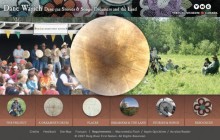
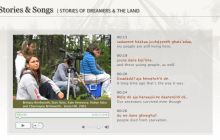
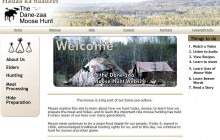
The Doig River First Nation, a group I have worked collaboratively with, has been engaging in auto-ethnography and collaborative ethnography since the late 199os when they began using digital video to document their cultural traditions and their changing landscape – majorly impacted by oil and gas developments.  Some  examples of this kind of auto-ethnography can be seen in these multimedia projects.  While they have been well received by the public, I would not say that they have gone “viral”:


So I was glad to see a link to this documentary, produced in 2010 for CTV’s ”First Story,” Black Blood: Tainted Land, Dying Caribou, recently posted on the Facebook page of my Doig River “friend” April Askoty. I ”shared” April’s link to the documentary on my Facebook page and got quite a few comments about it there.  And so the circulation/distribution continues here.

I think that Black Blood: Tainted Land, Dying Caribou, provides some of that “stomach turning” material that could mobilize people to keep distributing the documentary through social media, and give it, and the Doig River First Nation’s concerns, a wider audience.  The documentary is about the struggle and frustration that the Doig River First Nation has experienced as their concerns about ecological and health effects from oil and gas extraction practices in their territories of northeastern BC have not been taken seriously.

Amongst other issues, the documentary points out how the mandatory “consultation” with Aboriginal stakeholders that is part of the environmental impact assessment for oil and gas developments in Canada, is merely a hoop to jump through for the developers, and that the concerns about the documented environmental impacts from the developments on their Aboriginal and Treaty rights are not taken into account by the government as they continue to issue permits to developers to continue industrial work which impacts the land and its ecosystem.

I hope that by pairing this type of stomach turning documentation with articles like this one, How Aboriginal Rights Could Stop Enbridgeby Martin Lukacs (Huffington Post, Jan 19, 2012), the public will come to recognize how Indigenous Rights in Canada, when upheld by the courts, “trump” the rights to extract resources.  The article refers to the Enbridge Northern Gateway Pipeline in particular, but the concept could be applied to all oil and gas, and other forms of industrial impacts as well.  As Lukacs writes,

The lands over which the pipeline would cross, and indeed most of the province, were never ceded by First Nations. Their claims were affirmed by the historic Supreme Court of Canada Delgamuukw decision in 1997 that recognized First Nations still held Aboriginal title. …

Government and industry have only partially succeeded in ignoring the courts and regaining the upper hand. They’ve spent 15 years entangling B.C. First Nations in dead-end negotiations whose goal is to ensure these rights are never given life. But the rulings have still created enormous uncertainty over land rights. “Our title underpins this fight,” says Chief Thomas. If the Enbridge review hearings rubber-stamp the pipeline, or Prime Minister Stephen Harper pushes it through, expect a First Nations lawsuit to kill it. Even former federal Aboriginal Affairs Minister Jim Prentice, now a corporate pipeline backer, has conceded First Nations have a “very strong case.”

Indigenous rights have thus reshaped the debate over the pipeline. But if these rights are one day implemented on the ground, they could reshape the country’s very geography. An upsurge of Canadians calling for their enactment could tilt the balance of power away from corporations and back to First Nations, transforming the management of our lands and waters. This means that supporting Indigenous rights is not simply about paying off Canada’s enormous debt for generations of crooked dealings: it is also our best hope of saving entire territories from endless and senseless extraction and destruction.
(
http://www.huffingtonpost.ca/martin-lukacs/keystone-pipeline_b_1215693.html?ref=fb&src=sp&comm_ref=false)

So, let’s occupy and maintain our land by occupying social media with auto-ethnographies about what is going on.  Over and out from my wordpress soapbox.


Adding to the Story: The Master from Flint Hill: Earl Scruggs – by Steve Martin, the New Yorker

It is really nice to read about the life of Earl Scruggs, and the manner in which he was open to, and tried out, new musical styles – like adding drums to his Earl Scruggs Revue “a bluegrass no-no,” as Martin says.  Not to mention taking a stand on issues like racism and participating in anti-Vietnam War protests, both concerns not popular with the base of Scruggs’ country audience.

Read more in Steve Martin’s Jan 17, 2012 New Yorker article.

Advertisement found by folklorist Amber Ridington, courtesy The Park City Daily News, 02/02/1948. Station WSM Nashville Presents Grand Ole Opry Star Bill Monroe and his Blue Grass Boys. Plus The Blue Grass Quartet featuring Chubby Wise, Lester Flatt, Earl Scruggs, Cedric Rainwater. Tops in Entertainment. As A Special Added Attraction, “The Kentucky Mountain Boy” Bradley Kincaid with his Hound Dog Guitar. Also, Joe Marshall and his Roving Ramblers. Friday Feb 6, 7:30 P.M. Quonset Auditorium, Bowling Green, Ky. Admission 75c – Children 50c. tax included. Don’t Miss the Big Grand Ole Opry Show.

Here is a little tidbit of history about Earl Scruggs and Bill Monroe and his Blue Grass Boys to add to the narrative.

In doing research for my documentary, Rovers, Wrestlers and Stars – The Quonset Auditorium in Kentucky (2010), I found an advertisement for one of the last performances of Earl Scruggs and Lester Flatt as part of the band, Bill Monroe and his Blue Grass Boys.

This performance took place at the Quonset Auditorium, a regular stop-off for Monroe on the weekly tour circuit back to the Ryman Auditorium, the home of the Grand Ole Opry.

Chubby Wise had already left Monroe’s band, so he did not perform as listed on the ad copy, but according to Tom Ewing (2002), Flatt, Scruggs and Watts were with Monroe for about a week after this performance, and Scruggs stayed with Monroe until close to the end of February, 1948.  Monroe continued to perform at the Quonset Auditorium with his new band up until the Quonset Auditorium closed in 1959.

The Quonset closed, in part, due to dwindling attendance as TV performances took the place of live performances in the small towns between destination cities like Nashville, Chicago, and New York on the tour routes.

While this advertisement for the Grand Ole Opry Show indicates the end of an era with Flatt and Scruggs as part Bill Monroe’s Blue Grass Boys, it also demonstrates how important venues like the Quonset were in the early careers of many now-famous recording artists (see the documentary to find out more).

I have a great deal of oral history recorded about Bill Monroe and his Blue Grass Boys that did not make it in to my documentary.  If anyone is interested they can contact me.

If you are in Kentucky, you can watch my documentary tonight at 10:30 EST on KET-PBS, or on a number of other broadcast dates between now and February 11th, 2012.

Check the KET-PBS broadcast schedule.

Webcast – After Digital Repatriation


http://www.ikebarberlearningcentre.ubc.ca/webcasts/node/985

Watch a tired me (my son was up with Salmonella the night before) at UBC’s SLSAIS colloquia, November 16, 2011.

Webcast – After Digital Repatriation: Articulations of Heritage, Community, and Cultural Property in a Northern Athapascan Hunting Group. Read the abstract.

Thanks very much to Eric Meyers, Aaron Loehrlein, and Jody Perkins for the invitation to speak and the warm welcome.  And thanks also to the Doig River First Nation and all my collaborators for the various projects I discuss.


Upcoming conference in Portugal: ECOMUSEUMS

ECOMUSEUMS 2012 CALL FOR PAPERS OPEN UNTIL JANUARY 31st 2012.

http://ecomuseums2012.greenlines-institute.org/ec2012website/

Sputnik Monroe and professional wrestling – their place in the Civil Rights Movement

Grappling with controversial issues is nothing new to wrestling.  This Memphis Moment post describes the real-life impact that professional wrestler Sputnik Monroe had in desegregating Ellis Auditorium in the 1950s.  Pete Daniel has also written about the role of sports (including pro wrestling) and popular music in breaking through social boundaries  - because of their popularity with both European-American and African-American audiences.

http://wknofm.org/post/memphis-moment-sputnik-monroe

This trend to cater to the crowd, and move toward integration, was also apparent at the Quonset Auditorium in Bowling Green, Kentucky which is featured in my documentary, Rovers, Wrestlers and Stars.

Although the Quonset (operating between 1946 and 1959) was never officially integrated it was the first venue in the area to open its doors to both black and white audiences – so that the owners could attract both the black and white communities to their auditorium and make more money that way.

Peoples’ memories of the Quonset include the loosening of segregation, and a tolerance for racial mingling at music and wrestling events, having entered the venue through separate doors according to Jim Crow policy .

Even though business sense and capitalism are not often thought of when it comes to the shift towards Civil Rights in the USA, the history of wrestling shows us that popular entertainment and the quest for the mighty buck did in fact play a role.

Upcoming Conference: Public Ethnography: Connecting New Genres, New Media, New Audiences

Conference: Public Ethnography: Connecting New Genres, New Media, New Audiences

http://www.publicethnography.net/news/registration-public-ethnography-conference

Victoria, British Columbia, Canada, June 1-2, 2012
Organizer: Phillip Vannini, (Communication & Culture, Royal Roads University
Keynote speakers: Paul Stoller (Anthropology, West Chester University), Norman K. Denzin (Communication, University of Illinois).

The adaption of storytelling in the age of globalization

http://challengingtraditions.wordpress.com

While checking out the networks section of the AFS website I stumbled across this blog post by folklorist Coppélie Cocq about an iPhone app that relays a traditional folktale through images, text and narration. Coppélie raises some great points about storytelling in digital environments and the innovations that keep the stories relevant to new audiences.

She also points out the careful negotiation between stability and change in the narratives – a topic that seems to always be at the crux of tradition.

This blog post about the adaption of storytelling in a digital and global setting is relevant to my previous post about the digital Proppian Fairy Tale Generator.  Because the stories used in the Fairy Tale Generator are taken out of context, and made relatively generic, they can be used as a kind of game, as well as a tool to illustrate structural components and sequences to stories and storytelling.  But I expect that the adaptation of stories from living traditions, with known links between storytellers and audiences are likely to be more charged with traditional knowledge and protocol to some extent (I know that this is the case with the Dane-zaa people from northeastern BC with whom I work).

What I was trying to get at in my post about the Fairy Tale Generator is an analogy between the use of this digital tool and the I Ching.  For example, a Chinese person steeped in Chinese philosophy will use the I Ching to find guideance and meaning.  As an Anglo-Canadian, I have used the I Ching with little understanding of the underlying principles behind the messages – just for fun to see what grain of guideance I can find in the book.  Our interpretations will be quite different as to what the I Ching narrative means, and how it can be applied in our lives.


Is this the new I Ching for webbed westerners? Take a narrative journey with the “Proppian Fairy Tale Generator”

This is fun for geeky structuralists. It could also be good for teaching intro courses and making structuralism seem more engaging.

“You have reached the Proppian Fairy Tale Generator, an experiment in electronic (re)writing and an exploration of the retranslation of modernist theory within the electronic environment.”

http://www.brown.edu/Courses/FR0133/Fairytale_Generator/gen.html

picture I like

Screenshot of Mary Ann Fisher, singer with the Ray Charles Band between 1955-1958, taken from the documentary Rovers, Wrestlers and Stars.

This picture of Mary Ann Fisher was taken from my documentary, Rovers, Wrestlers and Stars, which PBS-KET keeps on rebroadcasting. The next showings are scheduled for January.

Mary Ann passed away in 2004 just months after I interviewed her.

I keep on thinking a documentary  about her should be my next project.  I have a bunch of footage that I haven’t used with many stories about Ray Charles, Jimmy Scott, Joe Louis – all of whom had romantic relationships with Mary Ann at different times in her life.

Photoethonography blog – great resource for choosing an HD-SLR

Photoethnography by Karen Nakamura

I just talked to Lens and Shutter in Vancouver, and they said that the Panasonic GH2 can run for 30 minutes in full HD video mode without overheating, while the Canon Rebel T3i only lasts for 9 minutes – so that has helped me narrow down my choices.  The sales guy mentioned that the camera would automatically shut down after 29 min, 59 seconds because of Japanese laws that distinguish between cameras and video recorders.  I haven’t heard talk of that in the reviews.  Anyone know more?

finding vernacular tradition in the Occupy Movement

This article by Doug Ward in the Vancouver Sun shows the customs being used in the occupy movements.  The human microphone has been both celebrated as a way to make sure all voices and perspectives are heard.  It has also been criticized for incorrectly relaying messages, much like the game of “broken telephone”.

see “Rovers, Wrestlers and Stars” at the SVA Film & Media Festival in Montreal

Download the program for the SVA Film & Media Festival.

Traditional Arts Indiana webinar: using creative commons

Traditional Arts Indiana webinar recording: Using Creative Commons, led by Jason Baird Jackson in June, 2011.

This is a terrific resource that would be great to use for teaching about vernacular culture, intellectual property systems, and issues in protecting cultural property. It also is a great example of a recording of a webinar and making the ephemeral event available on the Internet for others to benefit from at their convenience.

Indigenous Law Conference/Workshop

An Exploratory Workshop: Thinking About and Practicing with Indigenous Law Traditions – Fort St. John, Sept. 30 – Oct. 2, 2011.

KET Rebroadcast of Rovers, Wrestlers and Stars in Sept. and Oct. 2011

More info on the film
Upcoming KET Airdates

KET to re-air Quonset documentary July 2-22, 2011

KET to re-air Quonset documentary July 2-22, 2011

Heritage and Individuals – upcoming conference in Finland

Wish I were going.

Webinar Series on issues in Public Folklore and Cultural Property

South Arts Webinars

Cultural Property on Google Maps – pros and cons

After reading Shelly Drummond-Demolli’s Jan 26 , 2011 Publore post on heritage mapping it got me thinking a bit.

PROS:
There have been some new great uses of the Internet for teaching about and displaying digital cultural heritage materials.  For example, the work done by folklorist Dale Jarvis using twitter, google maps, and iPhones to share this kind of material has been very popular, both with communities wanting a presence and tourists and voyeurs looking to get a real sense of place.

CONS:
But I wonder about cultural property issues with this type of global transmission.  Most trained ethnographers will make sure they have permission (release forms) to distribute cultural property before it goes online, but how do we ensure that all material is reviewed by stakeholders and vetted?

SOLUTIONS:
I like the open source Content Management System (CMS), Mukurtu, developed by Kim Christen and her colleagues for letting communities/users control who can access digital cultural materials. But it is not as easy to customize and populate a CMS as it is to create and link to digital cultural heritage on a “google my map” and requires community/stakeholder involvement and review of materials, and significantly more funding.

I’d love to hear what you think!

ONLINE EXAMPLES:
Dale Jarvis speaks about the art of storytelling on the world wide web: http://www.voicesofthepast.org/2009/08/10/podcast-dale-jarvis-on-the-art-of-storytelling-on-the-world-wide-web/

Google my maps tutorial video: http://doodledaddle.blogspot.com/2011/01/google-my-maps-tutorial-video.html

Google map workshop: http://doodledaddle.blogspot.com/2011/01/two-workshops-folklore-and-oral-history.html

New Working Paper series on Cultural Property: CP101

These articles (linked below) are really great food for thought, especially for thinking about group versus individual CP and looking at the use of CP from inside and outside cultural groups.

http://www.cultural-property.org/cp101

CP 101: Concepts and Institutions in Cultural Property is a Working Paper Series (ISSN 2191-7051) of the Göttingen Interdisciplinary Research Group on Cultural Property. Its aim is to provide poignant and accessible overviews of central questions related to cultural property. This series of informational papers intends to lay out the general conceptual and institutional frameworks that shape the stakes in current cultural property debates.